Canaries belong to what’s known as a Sentinel species. They’re used to detect risks to humans. Other Sentinel species include honey bees, bats, and swallows who warn of pesticide contamination. Aquatic animals warn of water pollution. Rabbits were used to check for leaks at Sarin nerve gas production plants.
A few months before COVID, and well before the first “lockdown”, the familiar shapes of my daily life distorted and blurred as I adapted to an auto-immune diagnosis. With no fix or cure for my condition, there was no “going back to normal” for me.
As the words “lockdown” “herd Immunity” and “clinically vulnerable” slithered into everyday life, I wondered about the choice of words and what mainstream framing of the pandemic might foreclose with respect to our future. We could have chosen other words, but that would have required us to frame the whole story differently.
I would not have chosen an auto-immune condition, but gawkily I began to feel the rightness of a slower pace and deeper rhythm being imposed on my daily life. COVID imposed limits no-one would have chosen, and we watched skies clear, airspace return to the birds, mountains emerge, and a hush fall over vast cities centres. Like many others, I wondered what this deeper rhythm and slower paced world might enable.
Mainstream narratives of symptoms that need “fixing” or “curing” so that “normal” can be “got back to” are deeply ingrained in our cultural mind-set about what “being well” and “normal” is. Mostly, we came at our global slowdown within that frame.
An Edinburgh based GP, Dr Gavin Francis, has written a short book: “Recovery, The Lost Art of Convalescence” about a journey most of us never intend to make and the frequent failure to make adequate space or time for healing. I don’t know anyone who would choose incurable or chronic illness and pain that necessitates relinquishing their former lives. I also don’t know anyone who would have chosen a global pandemic. But both beg questions about our willingness to examine assumptions around fixing and curing so that we can get back “to normal” as a definition of success.
With “lockdown”, I felt relief. Mainstream wasn’t rushing by. Normal wasn’t happening, but in the stunned collective blinking into uncertainty, I noticed that “locking down” wasn’t opening into the space of deep surrender and recovery I had begun to explore. I also had a different frame – my life as it had been was over, and within limits that I hadn’t chosen, I began to explore what was possible in a new reality.
I sometimes ask people: “Would you vote for a party or a person who promised you less?” Like a life changing illness, or a global pandemic, no one chooses less ease and comfort for more challenge and discomfort. It has to be visited upon us in some way. And in the bigger context of these times: ecological overshoot, the climate crisis and our planetary predicament, “normal” is wreaking carnage.
COP 26 arrived at the end of October 2021 and with it a dawning awareness in mainstream western leaders that technology isn’t going to be ready in time to “save us”. Since then, I’ve noticed a resurgence of the “need” for coal, based on assumptions that we must return to “normal”, and that “healthy” economies have momentum, drive and grow vigorously.
In January 2022 Aberpergwm colliery in Wales was given the go-ahead and, despite Welsh Government disapproval, the UK Government accepted a license application. Coal is the dirtiest, most carbon-heavy fuel we use for energy and globally, coal was supposed to be on life support.
As coal comes off life support, I find myself taken with old stories of Canaries in mines. Canaries were used in our recent past to warn of danger. As questions of what happens to the “clinically vulnerable” surface alongside expectations of return to “normal” and pre-pandemic rhythms reassert themselves, I wonder if Canaries were more “vulnerable” than miners, or were they more sensitive to a bigger truth?
When we talk of adapting, is it of technically engineering ways to enable us to be un-impacted by the toxic facts of our unsustainable habits, our coal addiction? And if we do find ways to be un-impacted by our habitual ways, what are we willing to let die, like Canaries, so that we can go back to “normal”? Is that another frame for “herd immunity”?
Canaries need immense quantities of oxygen to allow them to fly to heights that would give humans altitude sickness. Their anatomy enables a double dose of oxygen, one when they inhale and another when they exhale, holding air in extra sacs. So they also get a double dose of any poisons the air might contain.
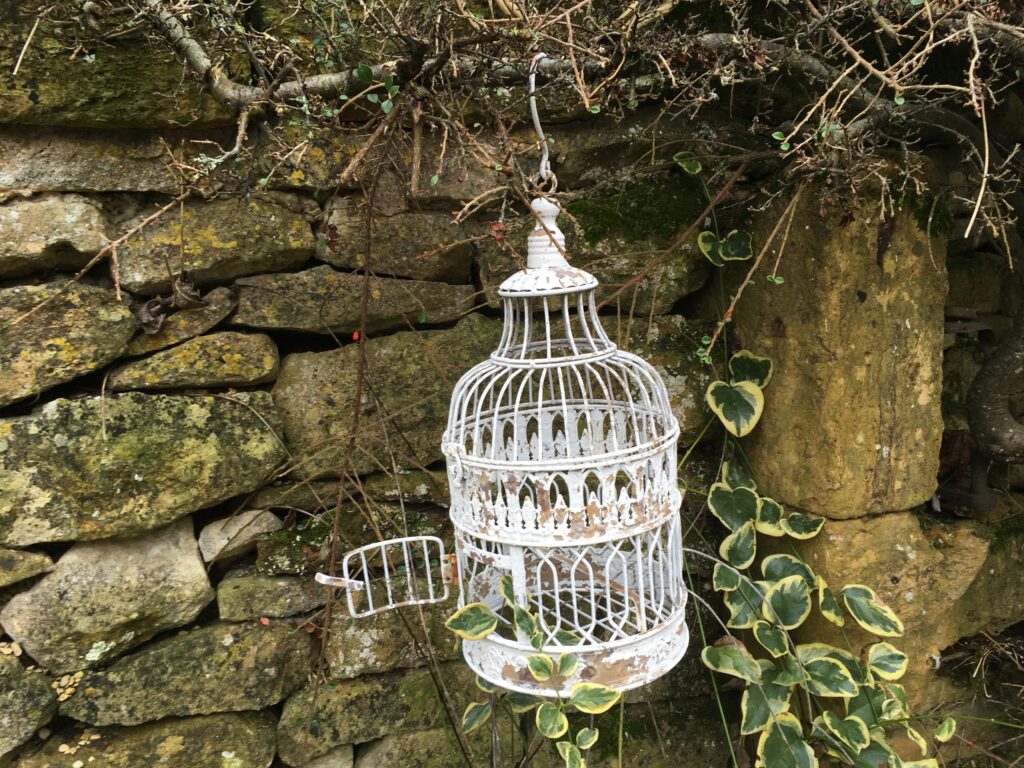
Initially, Canaries in coal mines were expected to perish. But in time, a special respiration cage was designed for the isolated canaries. There was a circular door that was kept open with a grill to prevent the canary escaping. If a canary showed signs of carbon monoxide poisoning the door would be closed and a valve opened, releasing oxygen from a tank on top of the cage to revive the canary; oxygen therapy.
Canaries belong to what’s known as a Sentinel species. They’re used to detect risks to humans. Other Sentinel species include honey bees, bats, and swallows who warn of pesticide contamination. Aquatic animals warn of water pollution. Rabbits were used to check for leaks at Sarin nerve gas production plants.
In telling the story of COVID the way we have chosen to, have we disabled the bodies oracular in our culture? Has Western medicine’s ability to fix or cure without anything changing, and without any willingness to engage in a period of healing and convalescence, where deep change take place, been complicit in shutting down the songs and swooping of our Sentinel species?
Framed as “lockdown”, that’s what a traumatised body does, and trauma is what happened. What if we’d called it an invitation to convalescence or even rehabilitation? What if we’d talked of rest and renewal and provided the means?
Lockdown seems to have frozen us. Emerging, there’s been no change, and I am grief stricken. Did lockdown put a way of life on ice, while we developed “herd immunity”? And now that previous way of life is being defrosted so that everything can be just as it was.
Herd immunity means we are no longer sensitive to something we previously were. The pursuit of human desires, immune to the wider destructive consequences, seems like numbness to me. What if being clinically vulnerable means staying sentient, not being numb, and like the Canaries, experiencing toxic impact long before the miners. What if honouring the Canaries, valuing the Sentinel species requires the acceptance of limits and understanding the consequences of overriding them.
If I acknowledge my body as an integral part of a deeper culture, woven into the fabric of life, stitched into and interlaced with the more-than-human, how can my body not experience what is unfolding at this time?
For many of us, traveling the road through the past two years has been emotionally and mentally challenging and has had a profound impact on our physical bodies. Even if we haven’t had COVID, the journey has involved a descent that has recalibrated our inner and outer worlds.
As questions of “Is the pandemic finished yet?” or “Can I just get on with my life?” get louder, and amidst the optimism of those who feel we’ll soon be in a situation where the virus is circulating, we’ll “protect” people at risk, but your average person will be fine, I just feel grief.
From where I sit, the world pre 2020 no longer exists. Some may want it to, but it just doesn’t and I wonder if, in a desperate distortion of “Carpe Diem”, efforts will be redoubled by people trying even harder now to have what they had before. Like an addict that won’t go into rehab, COVID could have been framed as “the intervention”. An addict never welcomes an intervention and it’s the hardest thing for someone who loves an addict to trigger.
What if COVID no longer restricts our lives? What if humans continue to behave as if our planetary resources are without limit? If the “hope” is that restrictions are over and that we can be “free” to live as we want, we’ve learned nothing from the Canaries, or the approximately 3.7 million people living in the UK at this time classed as “extremely vulnerable”.
What if a different narrative had been adopted with respect to whatever COVID may be? What of the height and clear perspective of the beautiful Canary who sang in the depths of dark mines? What about a different story for the chaos and upheaval that COVID has visited upon us? What difference might a story of convalescence, rehabilitation, recovery, kindness and care have made?
Lungs and breathing; the Canaries told us in a song. It turns out that fossil fuels damaged the lungs of our planet, our prognosis is uncertain. So I’ll be away with the Canaries from now on, singing in the dark if I must. Canaries aren’t intended to be locked in isolated cages with an oxygen supply of their own. A group of Canaries are collectively known as an “Aria”, an opera of Canaries.
